


When should I take Social Security?
The short answer is that the best age to claim Social Security depends on your health, life expectancy, retirement date, investments, and income needs. While there is no one-size-fits-all answer, people who expect to live longer often benefit from delaying Social Security, while those with health concerns or immediate income needs may benefit from claiming earlier.
Before making a decision, it's important to understand how claiming age affects your benefit and how Social Security fits into your overall retirement plan.
How Claiming Age Affects Your Social Security Benefit
Social Security allows most people to begin benefits as early as age 62. However, claiming before your Full Retirement Age (FRA) results in a permanent reduction in your monthly benefit. Waiting beyond FRA increases your benefit until age 70.
In general:
- Age 62 provides the smallest monthly benefit.
- Full Retirement Age provides your standard benefit.
- Age 70 provides the largest monthly benefit.
The tradeoff is simple:
- Claim earlier and receive more years of payments.
- Claim later and receive larger monthly payments.
Because Social Security is adjusted for inflation and lasts for life, the decision can have a significant impact on retirement income over the long term.
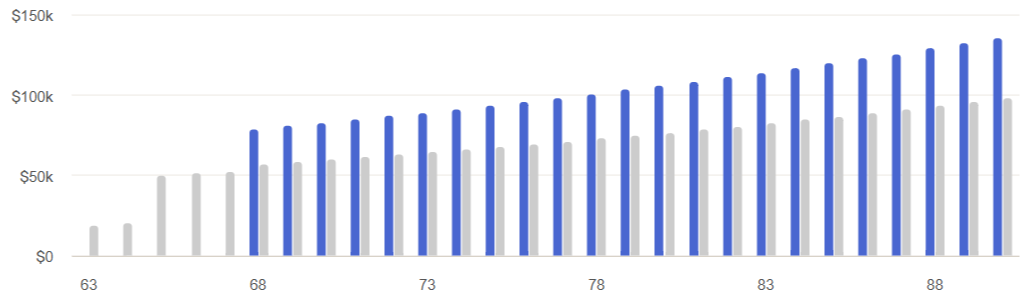
The above chart shows a hypothetical income difference of claiming early versus at Full Retirement Age. (Assuming 90 year life expectancy, actual benefit amounts will vary)
Is It Better to Take Social Security at 62, 67, or 70?
Many people searching for the best age to take Social Security are really asking one question:
How long do I expect to live?
For those in good health with a family history of longevity, waiting may lead to higher lifetime income. For those with serious health concerns or a shorter life expectancy, claiming earlier may make more sense.
While every situation is different, a general rule is:
Consider Claiming Earlier If:
- You have health concerns.
- You need income immediately.
- Your life expectancy may be below average.
Consider Delaying If:
- You are healthy.
- Longevity runs in your family.
- You have other income sources available.
- You want the highest guaranteed monthly income possible.
- You are concerned about outliving your savings.
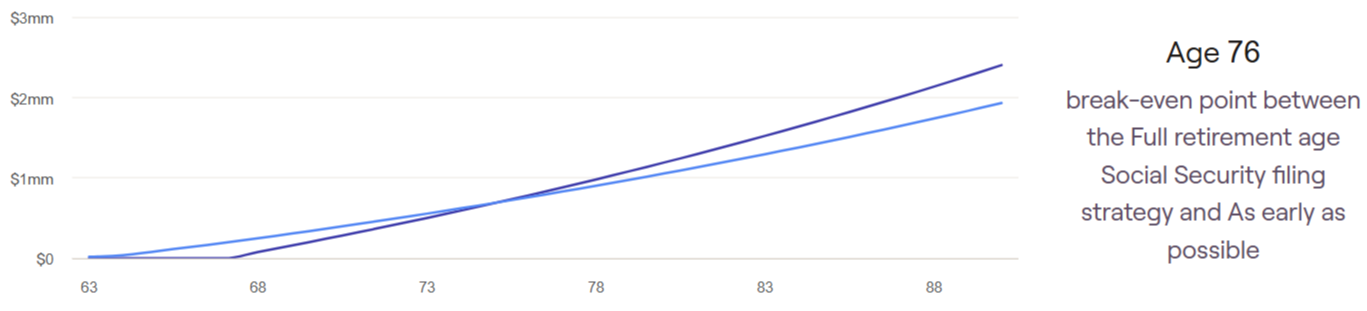
The above chart shows a hypothetical breakeven point between claiming early versus full retirement age. (Actual breakeven age will vary)
Should You Take Social Security While Still Working?
If you claim benefits before FRA and your earnings exceed Social Security's annual limits, some or all of your benefits may be withheld. Once you reach Full Retirement Age, those earnings limits no longer apply.
This means many workers who claim at 62 while continuing full-time employment may not receive the full benefit they expected. This effectively becomes a double penalty on your social security benefit.
How does Social Security fit into my retirement income strategy?
If you delay benefits, you may need to spend more from investment accounts, pensions, or savings during the early years of retirement.
If you claim earlier, you may reduce the amount you need to withdraw from investments.
Neither approach is automatically right or wrong.
The best Social Security claiming strategy depends on:
- Retirement savings
- Investment accounts
- Pension income
- Spending needs
- Tax considerations
- Health status
- Marital status
- Long-term retirement goals
A strategy that works well for one retiree may not be appropriate for another.
Social Security Decisions Are Especially Important for Married Couples
For married couples, Social Security affects more than just current retirement income.
When one spouse passes away, the surviving spouse may be eligible to receive the larger benefit amount. Because of this, delaying benefits can sometimes increase the income available to the surviving spouse later in life.
For many couples, this survivor benefit consideration becomes a major factor in deciding when to claim.
The Bottom Line
When deciding when to take Social Security, there is no magic age that works for everyone.
Life expectancy is often the starting point, but retirement timing, other income sources, investment assets, taxes, and family circumstances all play a role. The goal is not simply to maximize your Social Security benefit. The goal is to create a retirement income plan that can support your lifestyle throughout retirement.
At 3 Peaks Financial, our financial planning approach takes every one of these complexities into account to help you make the most of your social security benefit. Give us a call today to schedule your free consultation and get the retirement you’ve been dreaming of!
208-881-5505
Frequently Asked Questions About Social Security
What is the best age to take Social Security?
There is no universal best age. The right choice depends on your health, life expectancy, income needs, and retirement assets.
Should I take Social Security at age 62?
Age 62 may make sense for individuals who need income immediately or have health concerns that may shorten life expectancy.
Is it worth waiting until age 70?
For healthy retirees who expect a long retirement and have other income sources available, delaying to age 70 often results in the highest monthly benefit.
Can I collect Social Security and still work?
Yes. However, if you claim before Full Retirement Age and earn above certain limits, benefits may be reduced or withheld.
Sources:
https://www.ssa.gov/
Content in this material is for general information only and not intended to provide specific advice or recommendations for any individual. All performance referenced is historical and is no guarantee of future results. All indices are unmanaged and may not be invested into directly.
The economic forecasts set forth in this material may not develop as predicted and there can be no guarantee that strategies promoted will be successful.
Investing includes risks, including fluctuating prices and loss of principal.
3 Peaks Financial does not provide tax or legal advice. Please consult a tax professional before implementing information or strategies found in this publication.
*Connor Dye is solely an investment advisor representative of 3 Peaks Financial Advisors, and not affiliated with LPL Financial.